Self-sufficiency has its seasons. In the Spring, the 19th century residents of Bennington would have been tapping their maple trees to produce enough syrup and sugar to last the family through the year. In the Summer, planting, harvesting, and putting up the crops took up their time and dictated the school year of their children. In the Fall, harvesting apples to turn into cider was the order of business.
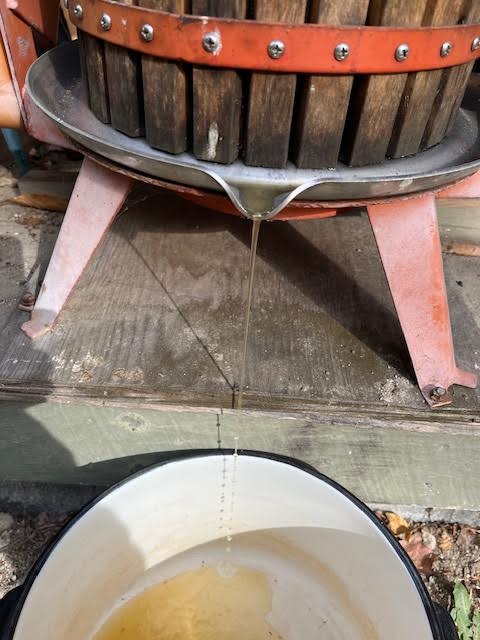
Apples were grown for several purposes: to eat fresh in the Fall, to make into pies and other desserts, to sell, to store in barrels to eat in the Winter, to make into cider, to make into vinegar. There were many varieties of apples that the homesteader could plant, some best for applesauce, some good for storage, some especially for cider. Cider itself had two purposes. When freshly pressed, it was a pleasant, sweet beverage, however it had a short shelf-life. On the other hand, sweet cider was also very easy to ferment into what we now call ‘hard cider’, which could be imbibed from Fall into Spring. The alcohol content might have been 5-8%. BTW, the apple trees that Johnny Appleseed [John Chapman] planted in Ohio were for making apple cider — hard apple cider. Making cider took some long-term planning!
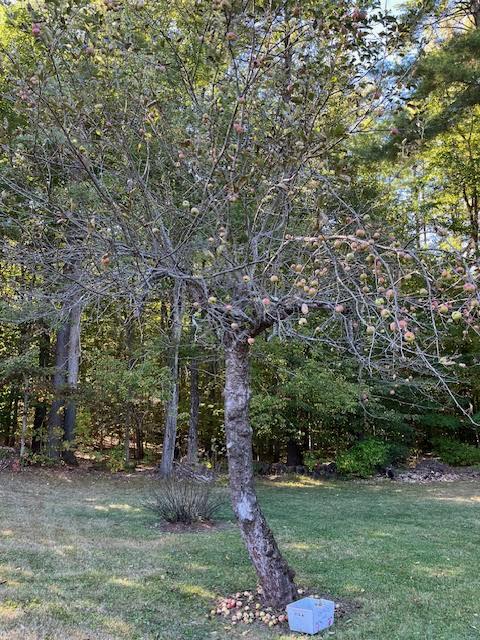
We live on land originally settled by the Colby Family in 1825. Where our house stands was the farm’s pasture and orchard. As we cleared the white pine forest for our house site, we found the descendants of ancient apple trees, still surviving. Colby’s trees had been planted in the 1820s, and might have begun to bear fruit 15 years later. Before Bennington was even a town, people were preparing to make apple cider. We preserved as many of those antiques as we could. One tree produces cider apples — small and tart and late-bearing, perfect for cider. Good cider is a combination of ‘cider’ apples and ‘sweet’ apples.
Pressing cider for the family could be done at home, using a small press, but more likely there was a neighborhood or town press that would deal with whole wagonloads of apples at once. Like a corn-husking bee, neighbors would gather to press their apples communally, putting the cider into barrels to store in the cold ‘back house’ at home. There it would ferment all by itself, if conditions were right. When temperature were cold in the Winter, the alcohol in the cider would prevent it from freezing, forming a layer of water ice on the inside of the barrel, with hard cider of high alcohol content [ABV 20%] in the center. Now we call this Ice Wine, and you pay a lot for it in the State Store. Teenage boys would sneak out to the back house with a straw, to sample the Ice Wine, knowing they would be in for a hiding if their dad found out! Dad was looking forward to that tipple for himself, to get him through the winter.
Apple cider, sweet or hard, was the go-to beverage of the 1800s. Making it was an important part of village and farm life of the past.
The next installment of the Bennington NH Historical Society Blog will be posted on November 17, 2025. If you click the Subscribe button, all future posts will be sent straight to your inbox every month – for free.
 Bennington, New Hampshire HistorySite Title