Since ancient times, the wealthy of the cities would flee to the hills of the countryside in the summer for a cooler, leafier life. In New England, one knows of Newport, Rhode Island and the Berkshires of Massachusetts as being the resorts of the rich. Add to that, Bennington, New Hampshire. There were the hotels in the Village Center of course, the Adams Hotel and the Crystal Springs Hotel, but there was also a thriving business of farms that took in Summer People.
A summer sojourn in the country took on a new impetus in the mid-1800s, as popular novels [Heidi, Secret Garden], medical professionals [Florence Nightingale], and social reformers [Fresh Air Fund] touted the healing powers of nature and the importance of fresh air. The growth of railroads made travel to ‘remote’ areas possible.
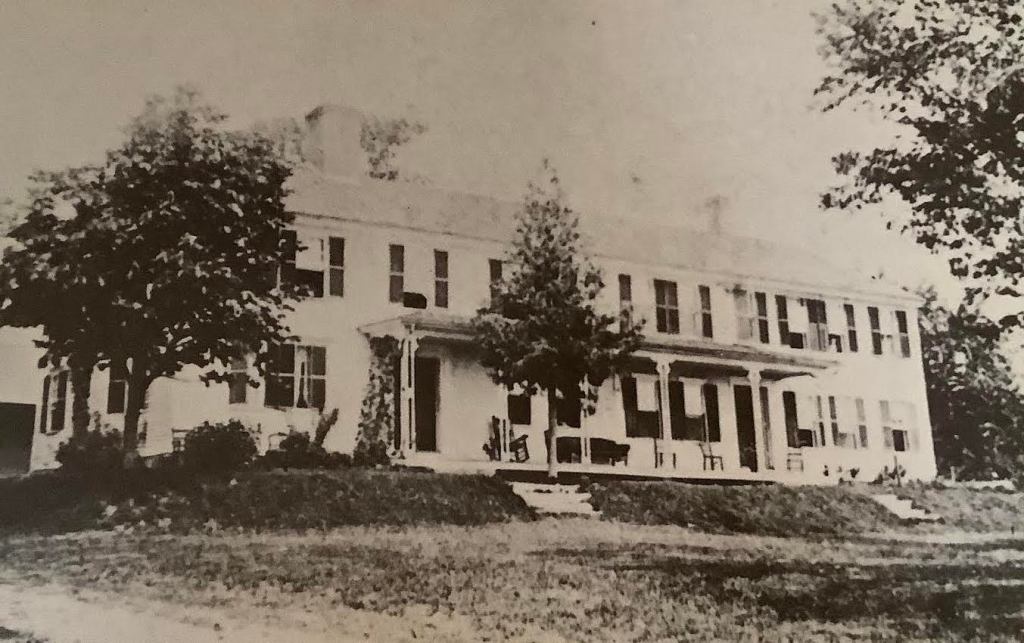
After the Civil War, farming slumped in northern New England, so a new income stream was devised. Farm wives were accustomed to cooking for large groups: their family, the laborers who helped with farm work — so why not take in summer borders? As people came from the cities in the summer, farms added a wing of rooms to accommodate them. Meals would be served communally three times a day, and transportation to and from the railroad station was provided. What did the Summer People do all day? Read on the veranda, take nature walks, pick berries, write letters, and relax. Among the farms that took in visitors were the Dodge House atop Dodge Hill Road, with panoramic views:
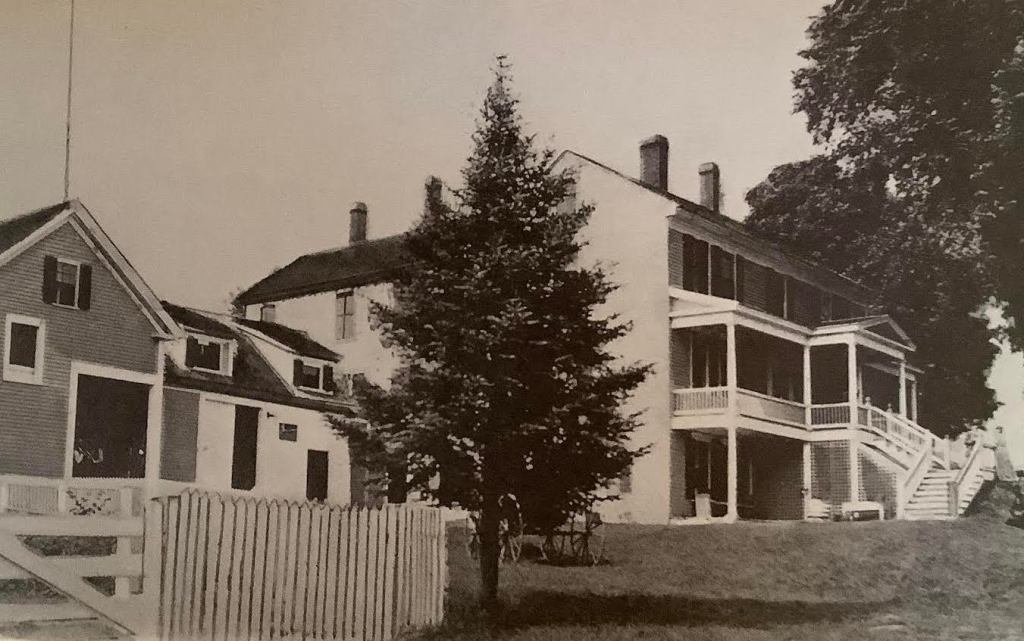
Colby-Green near-by on Larkin Road:
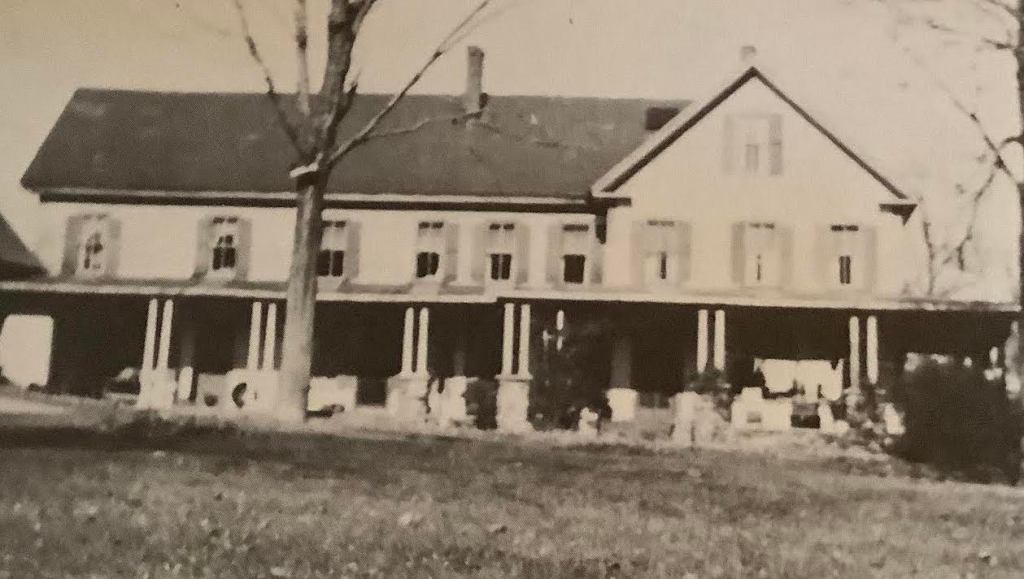
and Favor Farm on the Francestown Road with views of Crotched Mountain.
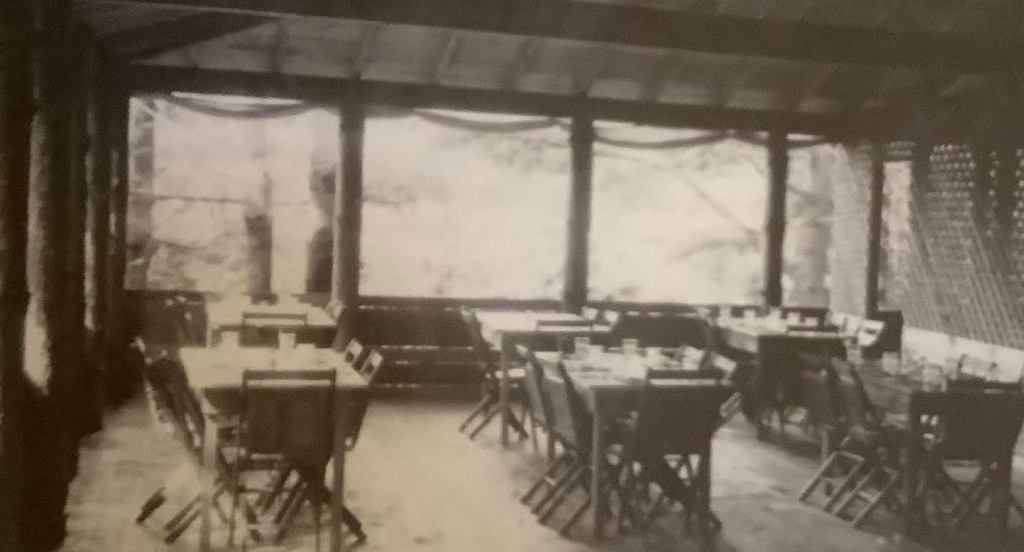
On the shores of Lake George [now called Lake Whittemore], were children’s camps. Tall Pines was founded by three siblings of the Reaveley family from Gloucester, Massachusetts in 1915. The clientele were the daughters of wealthy Bostonians who were sent to bucolic Bennington for an abundance of fresh air. Their summer included the arts, waterfront activities, hiking, theatricals, vegetable gardening, and ‘some form of useful work.’ The foci of athletics and the arts were always backed up by the emphasis of lots of fresh air– as seen in the windowless dining hall. The camp was damaged by both the Depression and the Hurricane of 1938, and attendance waned.
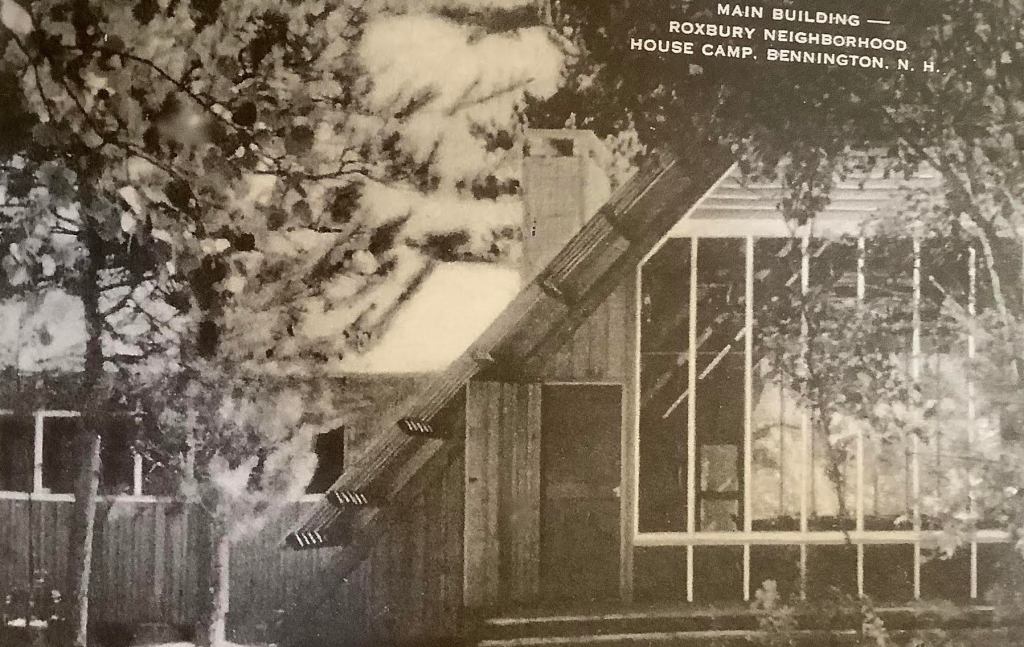
Next door, but culturally miles away, was the camp established by the Roxbury Neighborhood House of Roxbury, Massachusetts. The 120-acre location was bought by philanthropists who deeded it to the social reformers in Roxbury in 1914. They developed a camp where inner city children would stay for two-week sessions, serving 40 campers at a time in multiple encampments. This was a chance for under-privileged children to experience some carefree summer fun aways from the crowded city. Sometimes their mothers came for two or three day vacations. The racial tensions of the 1960s caused the Neighborhood House to change its focus, and the camp closed.
The next installment of the Bennington NH Historical Society Blog will be posted on July 11, 2023. If you click the Follow button, all future posts will be sent straight to your inbox every month.
 Bennington, New Hampshire HistorySite Title